
- Services
- Unicondylar Knee Replacement
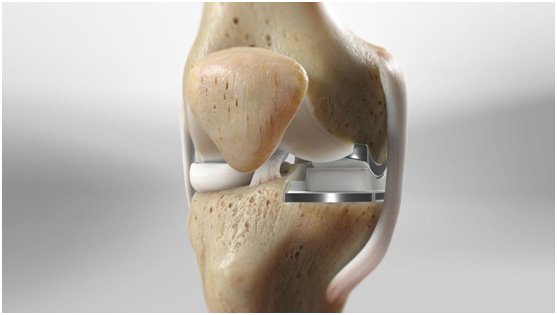
Unicondylar Knee Replacement
Unicompartmental knee replacement is a joint preserving surgery in which only the damaged compartment of the knee is replaced with an implant. It is also called a partial knee replacement. The knee can be divided into three compartments:
Patellofemoral compartment: the compartment in front of the knee between the knee cap and thigh bone
Medial compartment: the compartment which is on the inner side of the knee, and
Lateral compartment: the compartment which is the outer portion of the knee joint.
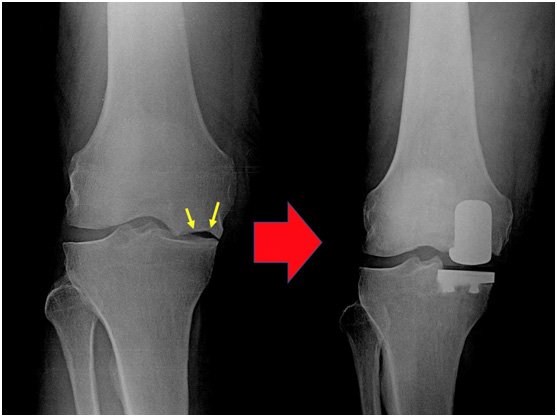
Advantages of Unicondylar Knee Replacement
Since only a part of the joint is replaced in a unicondylar procedure, the surgery often can be performed through a smaller incision and involves less bone and soft tissue dissection, thereby offering potential benefits in the early rehabilitation period. Most studies have shown that a unicondylar knee replacement results in less blood loss and a lower incidence of medical complication. Patients undergoing a unicondylar knee replacement also seem to have a more favorable outcome in regard to certain functions like stair climbing or kneeling. Most studies suggest that patients with a successful unicondylar knee replacement recover range of motion faster and have better overall range of motion compared to patients undergoing total knee replacement.
Smaller incision
No ligaments are cut
Better-preserved range of motion as compared to total knee replacement
Preserves healthy tissue and bone in the knee, promoting better knee function
Reduced blood-loss during surgery
Faster recovery because of the less-invasive nature of the surgery
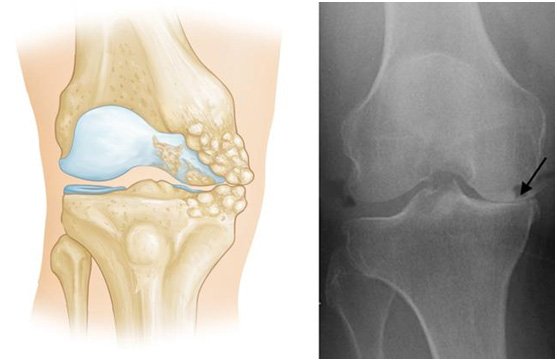
When Surgery is Recommended?
osteoarthritis in only one compartment of the knee joint may be eligible for a total knee replacement instead.
weight less than 100 kilograms
Do not have significant deformity (bow-legged or knock-knee deformity of the knee)
Rre still able to extend the knee to within 10 degrees of full extension (flexion contracture of less than 10 degrees)
Are able to bend the knee more than 90 degrees
shouldn’t have inflammatory arthritis
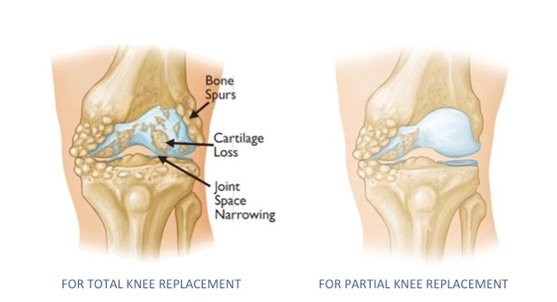
TKR Vs UKR
In TKR we replace all three compartments of knee joint.
On the contrary in UKR we replace only one compartment of your knee joint keeping other healthy compartments untouched.
When to do TKR?
Traditionally, total knee replacement (TKR) was commonly indicated for severe osteoarthritis of the knee where all these three compartments are severely damaged. In TKR all the compartments are treated with caps all over the joint surfaces.
When to do UKR?
But in some younger patients only the inner side of knee is severely damaged and fortunately other two compartments are healthy. In such patients only damaged medial compartment can be treated with Partial knee replacement (UKR) where metal caps are put only on inner side of your knee joint.
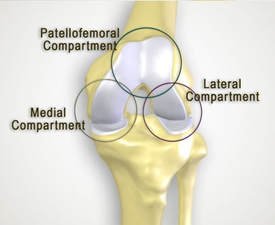
Compartments of knee joint
The knee can be divided into three compartments:
Patellofemoral compartment: the compartment in front of the knee between the knee cap and thigh bone
Medial compartment: the compartment which is on the inner side of the knee
Lateral compartment: the compartment which is the outer portion of the knee joint.
- Services
- Unicondylar Knee Replacement
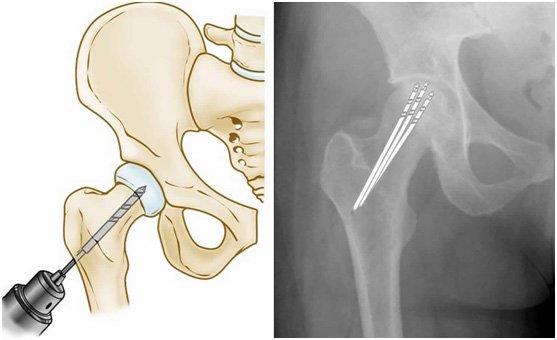
What is Core Decompression
Core decompression is a surgical procedure that involves surgical drilling into the area of dead bone near the joint.
This reduces pressure of toxic dead substances
allows for increased blood flow
slows or stops bone and/or joint destruction
Removing the dead bone stimulates healthy bone production and the development of new blood vessels
Core Decompression is commonly performed to treat Osteonecrosis.
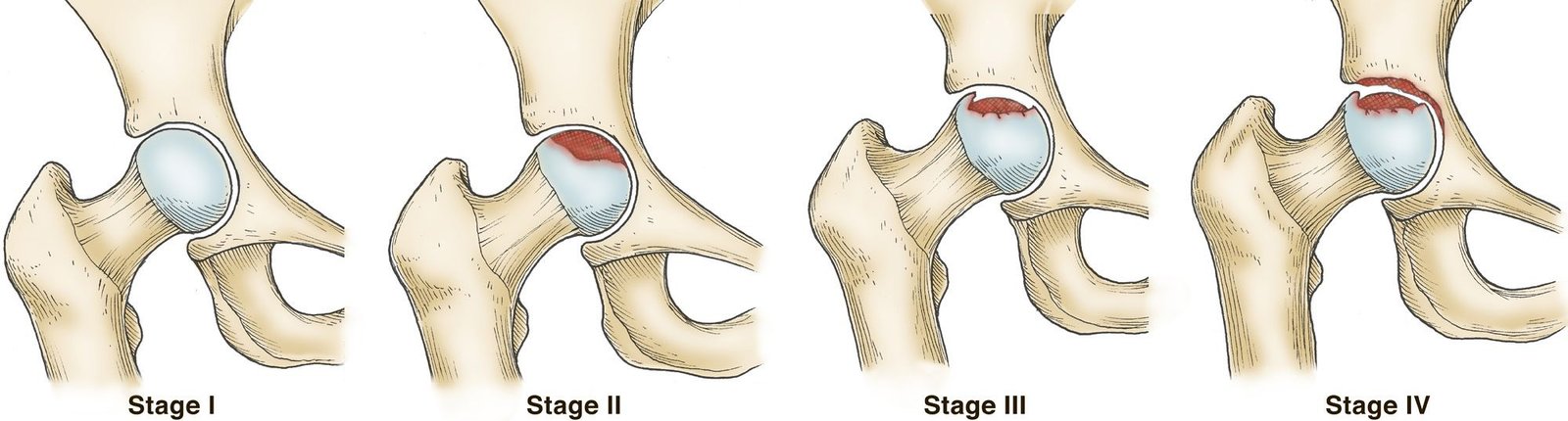
Avascular Necrosis
Avascular necrosis (AVN), also known as osteonecrosis, aseptic necrosis and ischemic bone necrosis, is a relatively common disease characterized by death of cellular elements of bone or marrow. The hip (femoral head) is the most commonly affected site for clinically significant AVN.
There are many risk factors for the disease including
Hemoglobinopathies
Dislocation of the hip
Alcoholism
Fracture of the femoral neck
Use of corticosteroid
Collagen vascular disease.
Enhanced Core Decompression
Here we offer enhanced core decompression with/without cell/bone grafting techniques, which can benefit individuals with stage 1 and stage 2 osteonecrosis.
Core decompression is typically successful for 50-90% of patients. Its success depends on the amount and location of bone death in a joint, how much weight the joint tends to bear and other factors.
Before The Procedure
Before the procedure is performed, your care team will do an MRI of the affected joint using advanced imaging techniques available at Stanford. This helps identify the areas of dead bone that need removal. Removing the dead bone stimulates healthy bone production and the development of new blood vessels.