
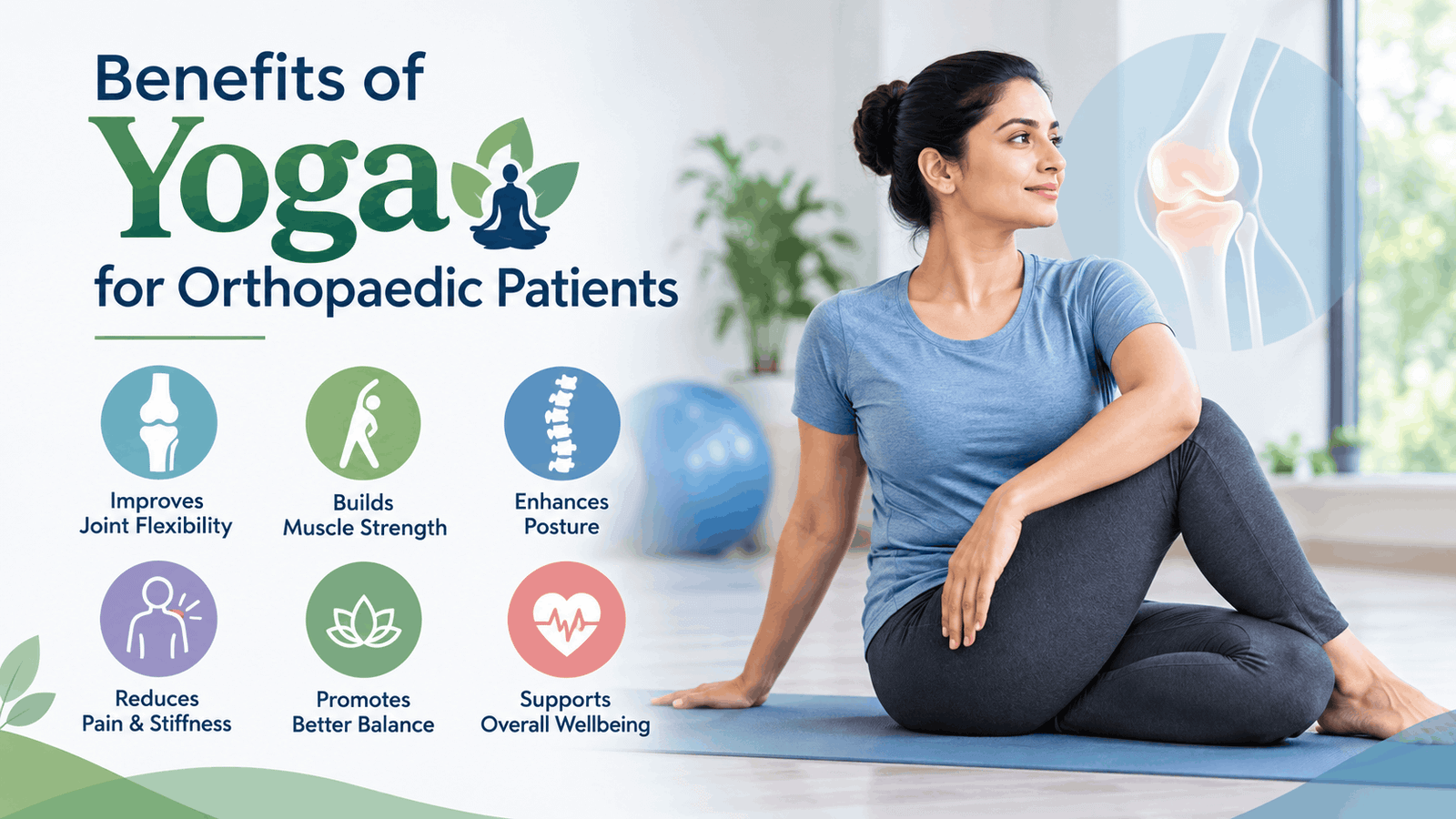
Benefits of Yoga for Orthopaedic Patients
Yoga is a gentle exercise that can help improve flexibility, balance, strength, posture, and body awareness. For people with joint stiffness, muscle weakness, or certain orthopaedic conditions, suitable yoga exercises may support mobility and overall physical health. Understanding the Benefits of Yoga for Orthopaedic Patients can help people include safe movement in their daily routine. However, patients with injuries or those recovering from surgery should always choose exercises according to their doctor’s advice.
At Happy Joints, patients can learn more about joint health, movement, rehabilitation, and treatment options. Yoga can complement professional orthopaedic care, but it should not be considered a replacement for medical diagnosis or treatment.
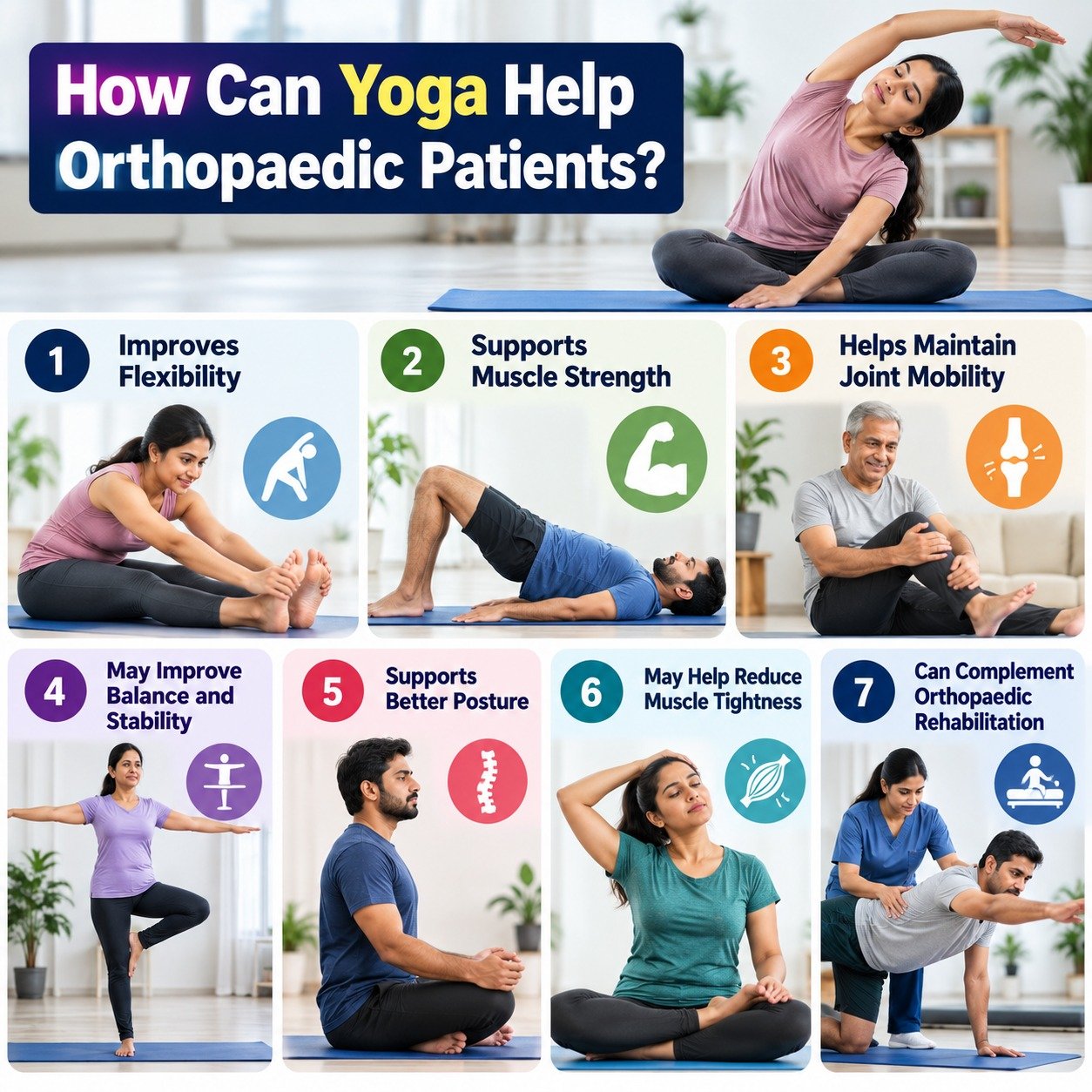
How Can Yoga Help Orthopaedic Patients?
Orthopaedic problems can affect bones, joints, muscles, ligaments, and tendons. Conditions such as arthritis, back pain, knee problems, shoulder stiffness, and reduced mobility can make normal activities difficult.
Gentle yoga focuses on controlled movements, stretching, breathing, and body awareness. When appropriately modified, it may help patients maintain flexibility and strength while encouraging regular physical activity.
The most important factor is safety. Not every yoga pose is suitable for every patient. The right exercises depend on age, medical condition, mobility, previous injuries, and treatment or surgery history. For patients with serious knee conditions, consulting a Top Knee Replacement Surgeon in New Bombay can help determine whether yoga and other exercises are appropriate for their condition.
1. Improves Flexibility
One of the main benefits of yoga is improved flexibility. Tight muscles can make simple movements such as walking, bending, reaching, or climbing stairs more difficult.
Gentle stretching can help improve the flexibility of muscles surrounding important joints. Better flexibility may make everyday movements more comfortable.
Patients should never force a stretch. A movement should be slow and controlled, and exercises that cause sharp or increasing pain should be stopped.
2. Supports Muscle Strength
Strong muscles provide support to the joints and help the body perform everyday activities. Some yoga poses require patients to use their leg, abdominal, back, shoulder, and hip muscles.
Improving muscle strength can be especially useful for people who have become less active because of joint stiffness or discomfort.
However, patients recovering from orthopaedic surgery should only begin strengthening exercises when their healthcare professional considers them appropriate.
3. Helps Maintain Joint Mobility
Regular movement can help prevent excessive stiffness. Gentle yoga exercises can encourage controlled movement and help patients maintain their available range of motion.
For people with knee problems, exercises should be selected carefully. Deep bending, twisting, or positions that put excessive pressure on the knee may not be suitable for everyone.
Patients considering Knee Replacement Surgery in Navi Mumbai should discuss their exercise routine with an orthopaedic specialist before starting new activities.
4. May Improve Balance and Stability
Balance is important for people of all ages, especially older adults and patients recovering from lower-limb problems.
Certain yoga positions encourage controlled standing, coordination, and body awareness. With appropriate support and supervision, these exercises may help patients become more comfortable with controlled movements.
People with serious balance difficulties should avoid practising challenging standing poses alone.
5. Supports Better Posture
Poor posture can increase stress on different parts of the musculoskeletal system. Spending long hours sitting at a desk or using a phone can also contribute to poor body alignment.
Yoga encourages awareness of posture and body positioning. Gentle exercises that strengthen the core and back may support better posture when performed correctly.
Good posture is not only about sitting or standing straight. It also involves learning how to move safely during daily activities.
6. May Help Reduce Muscle Tightness
Long periods of inactivity can contribute to muscle tightness. Gentle stretching and controlled yoga movements may help people feel less stiff and more comfortable.
Breathing exercises can also encourage relaxation. This can be useful for people who experience physical tension related to stress or prolonged sitting.
However, persistent pain should not be treated only with stretching. If pain continues, medical evaluation may be necessary to identify its underlying cause.
7. Can Complement Orthopaedic Rehabilitation
Rehabilitation is an important part of recovery after many orthopaedic procedures. Depending on the patient’s condition, selected yoga exercises may eventually complement physiotherapy and other rehabilitation activities.
For example, after knee surgery, a patient may gradually return to different physical activities as strength and mobility improve.
Patients considering Robotic Knee Replacement Surgery in Navi Mumbai should ask their orthopaedic team when they can safely return to different exercises. The recovery timeline can vary from one person to another.
Is Yoga Safe After Knee Replacement?
Many patients wonder whether they can practise yoga after knee replacement. In some cases, patients may return to selected yoga activities after adequate recovery and medical clearance.
However, not every yoga pose is appropriate after knee surgery. Deep knee bending, extreme twisting, kneeling, or movements that place excessive pressure on the operated joint may need to be avoided or modified.
A Knee Replacement Surgeon in Navi Mumbai can guide patients regarding suitable physical activities based on their recovery stage.
Patients planning treatment with a Robotic Knee Replacement Surgeon in Navi Mumbai can also discuss their preferred exercise activities during consultation.
Yoga for People With Knee Pain
People with knee pain may be tempted to stretch or exercise without understanding the cause of their symptoms. Knee pain can occur due to arthritis, injuries, muscle weakness, ligament problems, or other conditions.
Gentle exercises may be helpful for some people, but the activity should match the underlying condition.
If you experience significant swelling, instability, severe pain, or difficulty walking, consult an orthopaedic professional before starting a new exercise programme.
When Should Orthopaedic Patients Avoid Yoga?
Yoga may not be appropriate during certain stages of an injury or immediately after some surgical procedures. Patients should seek medical advice before exercising if they have:
A recent fracture or serious injury
Recently undergone surgery
Severe or unexplained joint pain
Significant joint swelling
Joint instability
Serious balance problems
Pain that becomes worse during exercise
The goal of yoga should be safe and comfortable movement rather than achieving difficult poses.
Tips for Practising Yoga Safely
Orthopaedic patients can follow these simple precautions:
Start with gentle movements.
Warm up before stretching.
Never force a joint into a painful position.
Use a chair, wall, or other support when necessary.
Increase exercise intensity gradually.
Follow your surgeon’s or physiotherapist’s instructions after surgery.
Stop exercising if you experience sharp or unusual pain.
Choose an instructor who understands your physical limitations.
Patients looking for a Knee Joint Replacement Surgeon in Navi Mumbai should discuss their daily activity level and exercise goals during their consultation. This can help the healthcare team create a treatment and recovery plan that fits the patient’s lifestyle.
How Can Orthopaedic Patients Include Yoga in Their Routine?
Patients do not need to start with complicated yoga sessions. A simple routine may include gentle stretching, breathing exercises, posture awareness, and basic movements.
Start slowly and focus on correct technique. Consistency is generally more important than performing advanced poses.
If a movement causes pain, do not assume that pain means the exercise is working. Stop the movement and seek professional guidance when needed.
For patients seeking specialist care around Panvel, you can explore the Knee Replacement Surgeon Panvel service offered by Happy Joints.
Patients can also use the Knee Replacement surgery Panvel to find the clinic and plan their visit.
Conclusion
The Benefits of Yoga for Orthopaedic Patients can include better flexibility, muscle strength, balance, mobility, posture, and relaxation when exercises are performed safely. Yoga can be a useful part of an active lifestyle, but the right approach depends on each patient’s condition.
Whether you are managing joint stiffness, recovering from treatment, or considering knee replacement, professional guidance is important before starting a new exercise routine. With appropriate modifications and medical advice, gentle movement can support long-term joint health and help patients remain active and confident.