
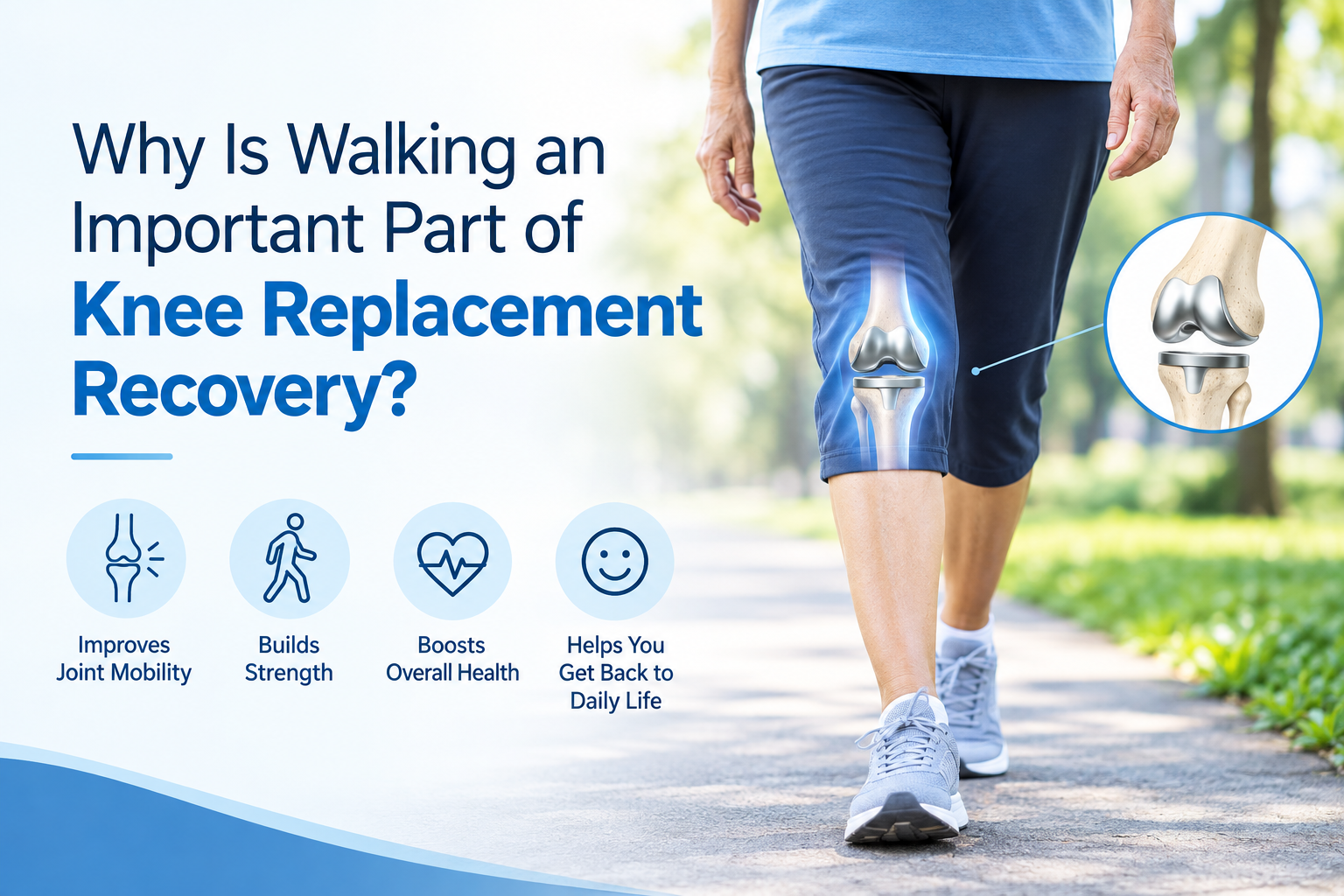
Why Is Walking an Important Part of Knee Replacement Recovery?
Walking is one of the most important activities during recovery after knee replacement surgery. Once your doctor allows you to start moving, short and controlled walks can help improve mobility, support muscle strength, and make everyday activities easier.
But why is walking an important part of knee replacement recovery? Walking allows the operated knee to gradually get used to movement and weight-bearing. It also works alongside physiotherapy and other parts of your recovery plan.
For patients considering Knee Replacement Surgery in Navi Mumbai understanding what recovery involves can help set realistic expectations before and after surgery.
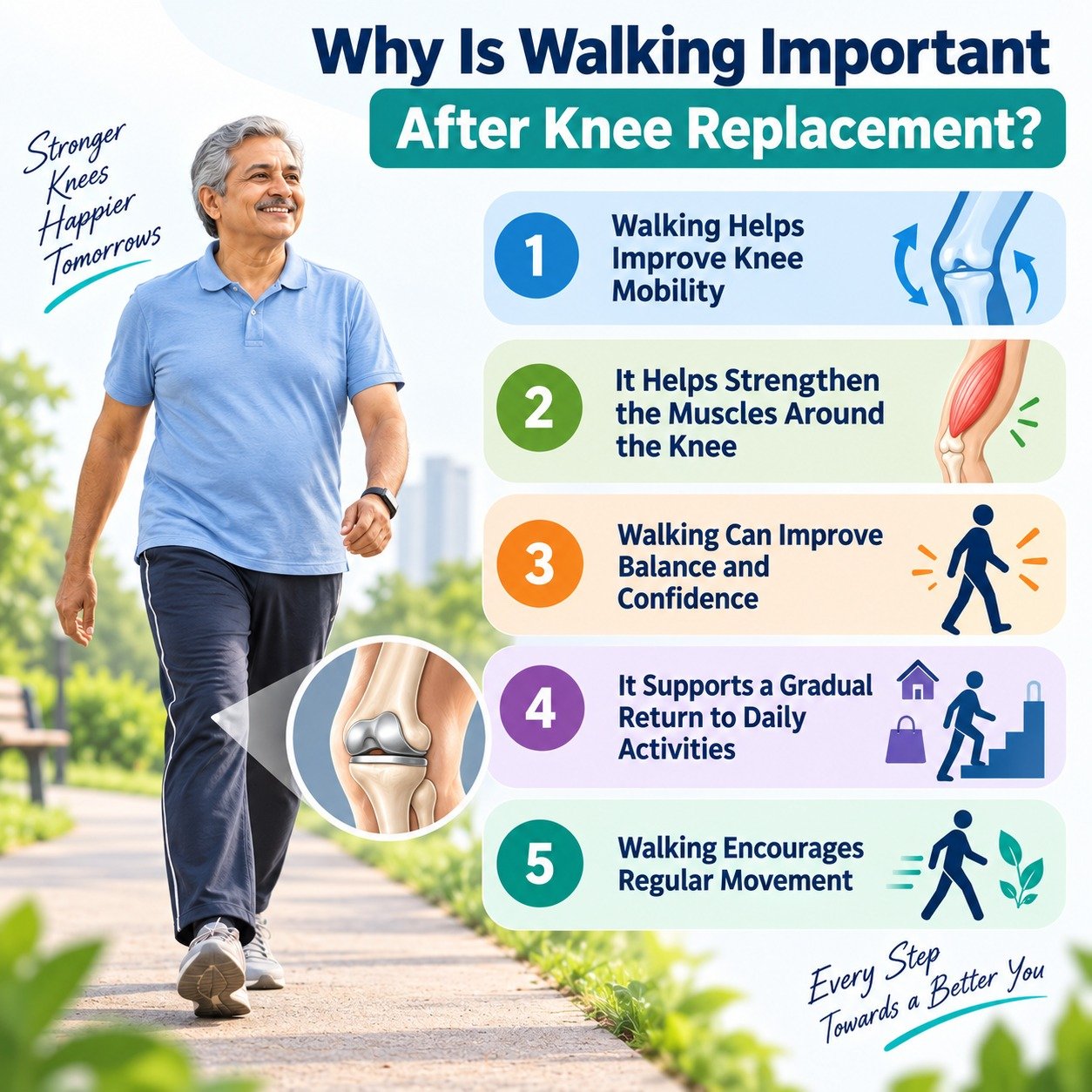
Why Is Walking Important After Knee Replacement?
Knee replacement surgery is performed to relieve pain and improve the function of a damaged knee joint. However, surgery is only one part of the treatment journey. Rehabilitation is also important for helping you regain movement and independence.
Walking provides gentle, functional movement after surgery. In the beginning, you may need a walker or crutches. As your strength and balance improve, your physiotherapist may gradually increase your walking distance.
The amount of walking that is appropriate depends on your overall health, surgical recovery, pain level, muscle strength, and your doctor’s advice.
1. Walking Helps Improve Knee Mobility
After knee replacement, the operated knee may feel stiff. Gentle movement can help you gradually work toward better knee flexibility and functional mobility.
Your rehabilitation programme may include walking along with specific exercises recommended by your physiotherapist.
If you are planning knee replacement treatment, an experienced Knee Replacement Surgeon in Navi Mumbai can explain how rehabilitation fits into your overall treatment plan.
2. It Helps Strengthen the Muscles Around the Knee
The muscles around the knee can become weak after surgery because of reduced activity. Stronger thigh, hip, and leg muscles can provide better support for everyday movement.
Walking is one way to gradually use these muscles again. However, it should be combined with the exercises prescribed by your physiotherapist.
Patients undergoing Robotic Knee Replacement Surgery in Navi Mumbai should also understand that technology-assisted surgery does not replace the need for appropriate rehabilitation. Your recovery plan still needs to be followed according to your individual condition.
3. Walking Can Improve Balance and Confidence
It is common to feel uncertain when taking the first few steps after knee replacement. You may worry about putting weight on the operated leg or losing your balance.
Walking with an appropriate walking aid can help you become more confident. As your strength and coordination improve, your physiotherapist can guide you on progressing from a walker to a stick and eventually walking without assistance when appropriate.
The aim is not to stop using your walking aid as quickly as possible. The aim is to walk safely.
4. It Supports a Gradual Return to Daily Activities
Simple activities such as walking around your home, going to the bathroom, preparing food, shopping, or climbing stairs all require functional movement.
Regular, gradual walking can help you work toward these activities during recovery.
A Knee Joint Replacement Surgeon in Navi Mumbai can discuss your expected recovery timeline and explain what activities you may be able to resume at different stages.
Remember that recovery is individual. One patient may progress faster than another, and that does not necessarily mean something is wrong.
5. Walking Encourages Regular Movement
Remaining inactive for long periods after surgery can make it harder to regain mobility. Getting up and moving as advised by your healthcare team encourages you to stay active during recovery.
Short walks may be more manageable than trying to walk a long distance at once.
A useful approach is to gradually increase your activity while paying attention to how your knee responds. If activity causes significant pain or swelling, speak with your healthcare professional before increasing your walking further.
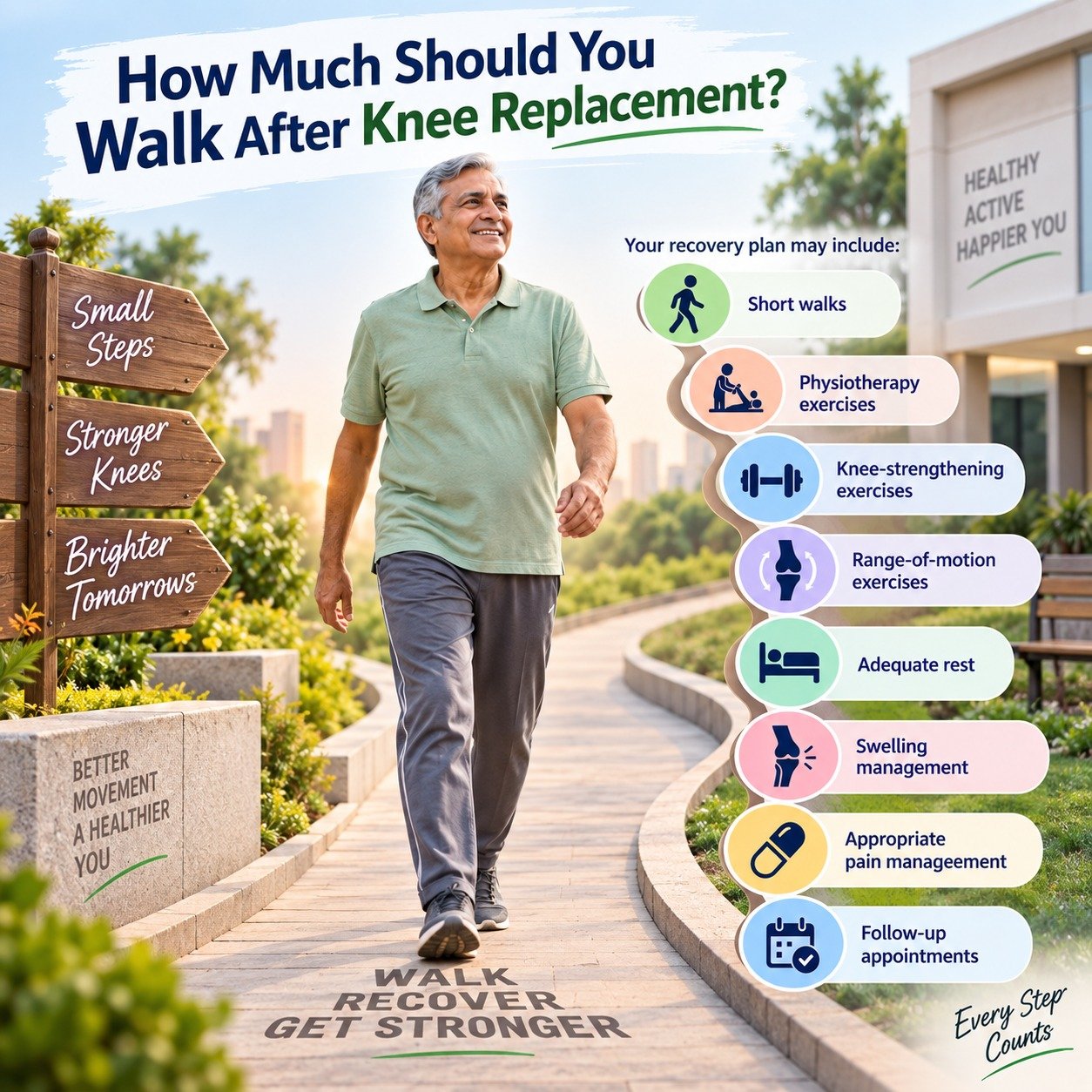
How Much Should You Walk After Knee Replacement?
There is no single walking distance that applies to everyone after knee replacement.
Your doctor or physiotherapist may initially recommend short walks with a walker or crutches. As your recovery progresses, you may gradually increase the duration and distance.
Instead of focusing only on the number of steps, pay attention to how comfortably and safely you are moving.
Your recovery plan may include:
- Short walks
- Physiotherapy exercises
- Knee-strengthening exercises
- Range-of-motion exercises
- Adequate rest
- Swelling management
- Appropriate pain management
- Follow-up appointments
If you have undergone or are considering robotic treatment, your Robotic Knee Replacement Surgeon in Navi Mumbai can explain how your individual rehabilitation programme may be structured.
Should You Walk Through Pain?
Some discomfort can be expected during recovery, especially when you begin increasing your activity. However, severe or worsening pain should not simply be ignored.
If walking causes significant pain, increasing swelling, instability, or difficulty putting weight on your leg, contact your doctor or physiotherapist.
Your recovery should focus on gradual progress rather than trying to achieve a specific walking distance too quickly.
When Can You Stop Using a Walker?
The timing varies from patient to patient.
Some people may progress from a walker to a stick and later walk independently. Others may require walking support for longer depending on their strength, balance, pain, and overall health.
Do not stop using a walker simply because you feel you should be walking independently. If you are limping or feeling unstable without it, you may still need support.
Your Knee Replacement Surgeon in Navi Mumbai and physiotherapist can assess your progress and guide you through each stage.
Is Walking Enough for Knee Replacement Recovery?
No. Walking is an important part of rehabilitation, but it is not the entire recovery process.
Successful rehabilitation may involve several factors, including prescribed exercises, appropriate pain management, adequate rest, nutrition, wound care, follow-up appointments, and gradually returning to normal activities.
The goal is not simply to walk farther. The goal is to regain safe, comfortable, and functional movement.
Patients researching the Top Knee Replacement Surgeon in New Bombay should therefore consider not only the surgical procedure but also the approach to postoperative care and rehabilitation.
How Can You Prepare for Knee Replacement Recovery?
Preparing before surgery may make the recovery process easier.
Your healthcare team may advise you to work on maintaining appropriate strength and mobility before surgery, understand your postoperative exercises, arrange help at home, and prepare your living space for safer movement.
If you are exploring Knee Replacement Surgery in Navi Mumbai discuss your health history, lifestyle, expectations, and rehabilitation requirements with your orthopaedic specialist before deciding on treatment.
For patients from Panvel, you can also learn more about treatment options through our page for a Knee Replacement Surgeon Panvel
Patients looking for directions related to knee replacement services in Panvel can also view the location on Google Maps:
Knee Replacement Surgery Panvel
Conclusion
Walking plays an important role in knee replacement recovery because it helps patients gradually regain movement, strength, balance, confidence, and independence.
The key is to start safely, follow your rehabilitation plan, and increase activity gradually. Avoid comparing your recovery with someone else’s because every patient has different needs and recovery goals.
If you are considering knee replacement treatment, consult a qualified orthopaedic specialist to understand whether knee replacement is appropriate for you and what your recovery plan may involve.
Happy Joints provides guidance for patients exploring knee replacement treatment and rehabilitation in Navi Mumbai, including those considering conventional or technology-assisted treatment options.